EN
EN  ID
ID  AR
AR  ZH
ZH 
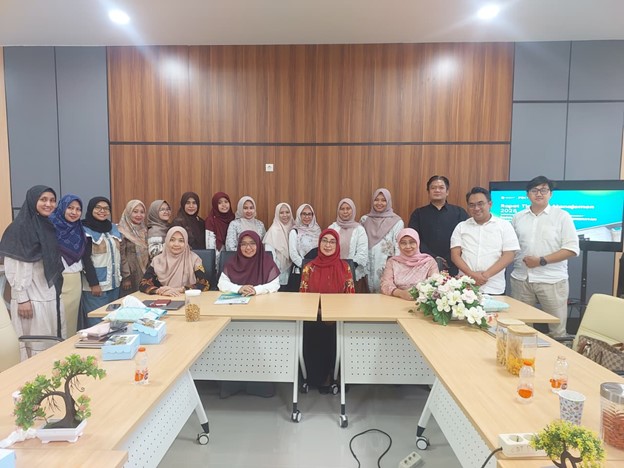
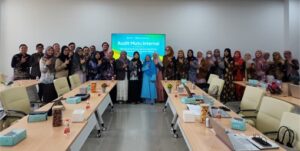
Batu, December 16, 2025 — The Management Review Meeting (RTM) is one of the efforts of the Faculty of Medicine and Health Sciences (FKIK) UIN Maulana Malik Ibrahim Malang to fulfill the quality assurance cycle. This activity is conducted to evaluate the effectiveness of the implementation of the quality management system and measure the performance achievements of the faculty, study programs, and subordinate work units.
The RTM preparation carried out was the formation of an implementation team by the Quality Assurance Unit. Next, this implementation team held a technical coordination meeting, compiling RTM materials consisting of 6 things, namely; 1) Internal quality audit results, 2) Customer feedback, 3) Service process performance and contribution compliance, 4) Follow-up from the previous RTM, 5) Internal and external changes that affect the quality assurance system, and 6) Recommendations for improvement. After that, the implementation team created RTM guidelines, determined the invited participants and sent the guidelines and invitations to the determined participants. Participants consisted of Faculty Leaders, Heads of Sections, Study Program Leaders, Faculty and Study Program Quality Assurance Units, and Heads of Faculty Support Units. The RTM implementation mechanism began with an opening, presentation of the 6 RTM materials, followed by a commission meeting to determine the follow-up plan-completion targets and those responsible, and ended with the signing of the results of the commission meeting and the submission of improvement recommendations from the faculty dean.
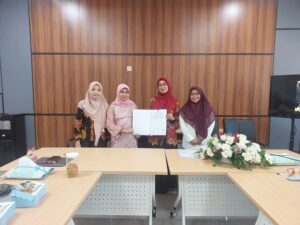
The Quality Assurance Unit (UPM) plays a significant role in the planning and implementation of the FKIK RTM. The UPM's role is to prepare data findings, develop the RTM agenda and materials, facilitate implementation, and document RTM results and recommendations as a basis for continuous quality improvement. The quality aspects focused on control in the FKIK RTM include the achievement of educational quality standards evaluated through an Internal Quality Audit, feedback from stakeholders, the achievement of Key Performance Indicators (KPIs), and internal and external changes that impact the organizational system.
The monitoring and evaluation mechanism for the follow-up of the 2025 RTM results includes incorporating the RTM recommendations into the 2026 work program, reporting on the progress of the follow-up plan implementation, and evaluating the follow-up achievements in the next quality assurance cycle. The RTM results are a strategic node in the Determination, Implementation, Evaluation, Control, and Improvement (PPEPP) cycle at FKIK UIN Malang, so that the RTM results are closely related to improving the quality of the faculty. The RTM serves as an institutional reflection space for: 1) Consolidating the findings of the Internal Quality Audit (AMI), IKU/IKK, tracer study, user satisfaction, and Tri Dharma achievements, 2) Identifying gaps between standards and implementation, both in the aspects of curriculum, clinical learning, HR, research, community service, and governance, and 3) Formulating measurable and data-based corrective and preventive actions. Thus, the results of the RTM do not stand alone, but become a driving force for the life of the institution through implementation and continuous quality improvement, because each RTM recommendation is translated into a unit follow-up plan, accompanied by clear achievement indicators, responsible persons, and timelines.
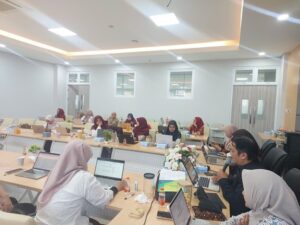
The results and recommendations of the RTM are actually used as the main reference in faculty policy making, including through; 1) Formulating academic and non-academic policies such as strengthening OBE and PBL-based curricula, adjusting CSL and clinical learning scenarios, and increasing the capacity of lecturers and education staff, 2) Determining program and budget priorities with evidence-based principles, supporting the fulfillment and improvement of LAM-PTKes standards, and synchronizing with the Faculty and University Strategic Plans, 3) Strengthening the control system, where RTM recommendations are monitored periodically by the leadership, become evaluation material in the next RTM, and are used as a basis for mitigating academic risks and governance. With this mechanism, RTM is not only implemented as an administrative forum, but also becomes a strategic policy instrument for the faculty.
Ermin Rachmawati, M.Biomed as the Vice Dean for Academic Affairs expressed her hopes for the implementation of RTM in the future in the following points; 1) Increasingly based on data and risk analysis, so that decisions taken are not only reactive, but also predictive and anticipatory, 2) More integrative across units, so that RTM recommendations are not sectoral, but support the strengthening of the faculty system as a whole, 3) Strengthening the culture of quality and academic leadership, where RTM is understood not as an administrative obligation, but as a means of organizational learning, and 4) In line with the vision of FKIK UIN Malang, especially in producing superior health worker graduates, with ulul albab character, and national-international competitiveness. With RTM that is consistent, meaningful, and follow-up oriented, she is optimistic that RTM will be the main driving force in achieving the vision, mission, and reputation of FKIK UIN Malang in a sustainable manner.
Contributors: Nailah Khansa Shabrina (PSSF 25), Ria Najja Nila Nafi'ah (PSSF 23), Jasmine Athiyya Arva Ma'sum (PSSF 23)