EN
EN  ID
ID  AR
AR  ZH
ZH 
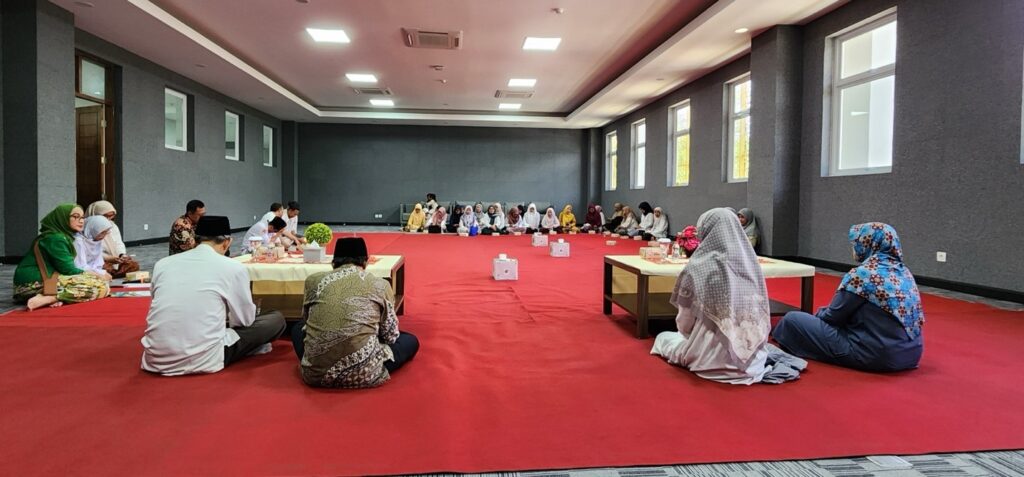
ROCK – A solemn and emotional atmosphere enveloped the Hall of the Faculty of Medicine and Health Sciences (FKIK) Building of the State Islamic University (UIN) Maulana Malik Ibrahim Malang on Tuesday, April 21, 2026. FKIK officially held the Farewell Ceremony for Prospective Hajj Pilgrims and Indonesian Hajj Health Workers (TKHI/PPIH) for 1447 Hijriah.
This event is a special moment for the extended family of FKIK UIN Malang, considering that this year a number of lecturers and educational staff are not only departing as guests of Allah (dhuyufurrahman), but also as the front guard of health services for Indonesian Hajj pilgrims in the holy land.
This year, the extended family of FKIK UIN Malang saw off the departure of lecturers who will fulfill the fifth pillar of Islam. The lecturers who departed as prospective Hajj pilgrims were apt. Abdul Hakim, S.Si., M.PI., M.Farm. and Dr. drg. Risma Aprinda Kristanti, M.Si. Meanwhile, Dr. dr. Avin Ainur Fitrianingsih, M.Biomed. also departed to carry out the noble mandate as a Hajj Pilgrimage Organizer Officer (PPIH) in Saudi Arabia.
Call of Honor and Self-Purification
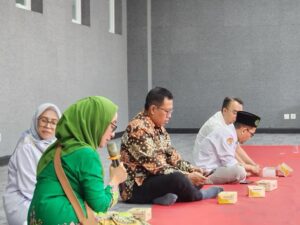
In his touching speech, the Dean of FKIK UIN Maliki Malang, Prof. Dr. Dr. Yuyun Yueniwati PW, Sp.Rad(K), He emphasized that this year's pilgrimage was the result of a direct invitation from the Creator. Quoting Surah Al-Hajj, verse 27 of the Quran, he reminded that the Hajj is a divine call that mobilizes people from all corners of the world.
“"This verse reminds us that the Hajj pilgrimage is a direct call from Allah SWT. Therefore, your presence as prospective Hajj pilgrims today is not merely a human plan, but an honorary invitation from Allah, the Lord of the Universe," said Prof. Yuyun to the audience.
He also emphasized the importance of maintaining the essence of the Hajj as a journey of spiritual transformation. Referring to a hadith narrated by Bukhari and Muslim, Prof. Yuyun explained that the outcome of an accepted Hajj is a person's return to a state of fitrah (natural purity), pure like a newborn baby.
“"Hajj is a journey of self-purification—not just physical, but also of the heart, intentions, and deeds. We advise all prospective pilgrims to purify their intentions solely." may Allah be pleased with you, ", increasing dhikr, guarding your tongue, and cultivating patience in every series of worship," he added.
Health as a Trust and Field of Service
As head of the medical faculty, Prof. Yuyun places special emphasis on health. He emphasized that a healthy physique is a key component in carrying out the energy-draining pillars and obligations of the Hajj.
“"Health is a trust. Strong worship requires a strong body. Therefore, maintaining good health is part of the effort of worship itself," he emphasized.
He also addressed those serving on the Hajj Pilgrimage Organizing Committee (PPIH) in the health sector. He entrusted them with a significant responsibility to carry out their duties with compassion. He stated that serving pilgrims who are sick or in need of assistance in the Holy Land is the highest form of devotion.
“"Make service to the congregation a field of worship. Remember that the best people are those who are most beneficial to others," Prof. Yuyun concluded his remarks.
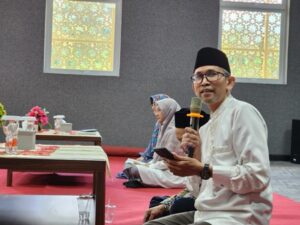
Mauidhoh Hasanah: The Philosophy of Wukuf and Equality
The event then continued with a session good news delivered by Dr. Ach. Nasichuddin, MA. In his tausiyah, he explained in detail the pillars of Hajj that must be fulfilled in order for the worship to be valid according to the Shari'a.
Dr. Nasichuddin's main focus was on the culmination of the Hajj pilgrimage, the Wukuf (standing still in Arafah). He explained that standing still is a miniature of the Mahsyar Field, where ego and worldly attributes are completely set aside.
“"The pinnacle of all Hajj rituals is the wukuf (standing still). It is there that we see the greatness of Islam, where all humans stand on equal footing. There are no positions, no professional titles, no social strata. Everyone wears the same ihram garments—two seamless pieces of white cloth," explained Dr. Nasichuddin.
He added that the simple ihram cloth symbolizes the purity and equality of humankind before Allah SWT. The seamless garment serves as a reminder that when humans face their Creator, they will bring nothing but their good deeds.
Hope for the Academic Community
This release closed with a joint prayer for the safety and smooth running of the prospective congregation. Sobs of emotion colored the mushafahah (exchanging greetings) session between the congregation who were leaving and their colleagues who were leaving.
The departure of the medical team from the Faculty of Medicine and Health Sciences (FKIK) of UIN Malang is expected to significantly contribute to reducing the morbidity rate among Indonesian Hajj pilgrims and bring blessings to the institution. The faculty hopes that upon their return from the Holy Land, the pilgrims and staff will bring renewed enthusiasm to their work and service in the fields of education and healthcare.
With spiritual preparation through manasik guidance and thorough physical preparation, FKIK UIN Maliki Malang sends off its ambassadors to seek Allah's pleasure at the Baitullah during the 1447 H Hajj season.