EN
EN  ID
ID  AR
AR  ZH
ZH 

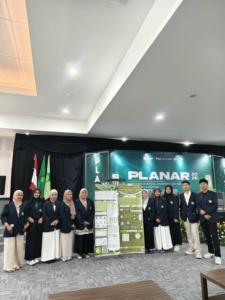
The Hajj pilgrimage is a complex spiritual journey, requiring comprehensive preparation, particularly from a health perspective. Students from the Faculty of Medicine and Health Sciences (FKIK) at UIN Malang presented an innovative health education breakthrough through a series of Interprofessional Education (IPE) seminars throughout January 2025. In collaboration with the Al-Ikhlas Islamic Boarding School in Batu City, they designed a comprehensive program that not only transfers knowledge but also transforms prospective pilgrims' understanding of holistic health.

Through three intensive meetings on January 11, 18, and 25, 2025, the students dissected aspects of health that are often overlooked. The first meeting, titled "Healthy Body, Comfortable Hajj," discussed a variety of critical topics ranging from strategies for navigating the Hajj terrain, medication consumption management, nutritional optimization, to hypertension control. This topic was immediately discussed in depth by resource persons and lecturers from the Faculty of Medicine and Health Sciences, UIN Malang, namely Dr. dr. Ermin Rachmawati, M. Biomed., Dr. drg. Anik Listiyana, M. Biomed., dr. Riskiyah, MMRS., Larasati Sekar Kinasih, M. Gz., and apt. Novia Maulina, S. Farm., M. Farm. Each material was delivered in a scientific yet easy-to-digest manner, debunking myths and providing a deep understanding of pre-departure health preparation.

The second session, "The Secrets of a Healthy, Smooth, and Accepted Hajj," focused on sensitive, specific health needs. Experts addressed crucial topics such as women's health, urinary tract issues, and emergency health protocols without further ado. These topics were directly addressed by professional speakers in their respective fields: Yossi Indra Kusuma, S. Ked., M. Med. Ed., Dr. dr. Avin Ainur F., M. Biomed., and Dr. Christyaji Indradmojo, Sp. Em. This comprehensive approach provided pilgrims with practical guidance for dealing with various health scenarios during the pilgrimage, going beyond conventional medical information.

The highlight of the third meeting was a talk show titled “Towards an Accepted Hajj,” which presented a multidisciplinary perspective. Seven dimensions of health—including sleep quality, understanding of health jurisprudence, medication management, respiratory health, nerves, skin, and eyes—were discussed in depth. These topics were chosen based on the problems frequently encountered by prospective Hajj pilgrims during their preparations for their trip to the Holy Land. The participants’ enthusiasm reached its peak, with a dynamic question-and-answer session demonstrating the strong thirst for comprehensive Hajj health information. This was driven by the engaging presentation of the material by expert speakers in their fields, namely Dr. dr. Lailia Nur Rachma, M. Biomed., apt. Siti Maimunah, S. Farm., M. Farm., and Muhammad Amiruddin, Lc., M. Pd.
This innovation disrupts the conventional approach to developing prospective Hajj pilgrims. It's not simply a transfer of knowledge, but a systematic effort to prepare pilgrims physically, mentally, and spiritually. The collaboration between health students and Hajj guides demonstrates the potential of higher education institutions to make a real contribution to the welfare of the community, emphasizing that Hajj preparation is a multidimensional journey that requires a holistic and in-depth understanding.
Contributors: Ahmadiyah Musliha (Pharmacy 22), Farika Nur Afiyah (Pharmacy 22)