EN
EN  ID
ID  AR
AR  ZH
ZH 
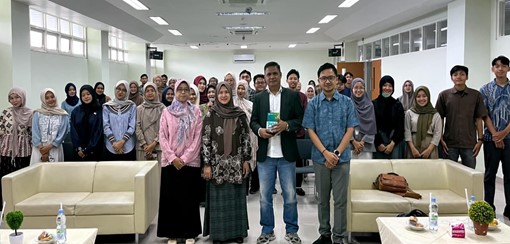
The Master of Pharmacy Program at the Faculty of Medicine and Medicine, UIN Maulana Malik Ibrahim Malang, held a guest lecture as part of its efforts to strengthen academics and broaden students' research horizons. The event raised the theme: “Qualitative Methodological Approach in Ethnomedicinal Research” relevant to the development of community-based and cultural pharmaceutical science. The guest lecture was held on Wednesday, April 22, 2026, from 8:00–10:00 a.m. WIB in the Auditorium of the Ibnu Sina Building, 3rd Floor, Campus 3, UIN Malang. This activity was attended by Master of Pharmacy students with high enthusiasm, demonstrating their interest in the development of multidisciplinary research.
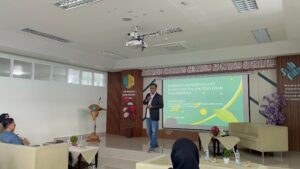
The guest lecture featured Dr. Maximus M. Taek from Widya Mandira Catholic University, Kupang, an expert in ethnomedicine. In his presentation, he explained that ethnomedicine is a healing practice based on local knowledge passed down through generations within a community and is part of the study of health anthropology. The material presented covered the basic concepts of ethnomedicine, the scope of the research, and qualitative methodological approaches that are exploratory and descriptive. Ethnomedical research focuses on understanding social, cultural, and community health behavior phenomena through observation, interviews, and field documentation techniques.
He explained that qualitative research in ethnomedicine is conducted in a naturalistic manner, with the researcher as the primary instrument, interacting directly with the community. The research stages begin with the process of entering the location (get-in location), building trust with the community, and selecting informants through purposive sampling and snowball sampling. Data collection was conducted through participant observation, open-ended interviews, and documentation, which was then analyzed through data reduction, categorization, and thematic interpretation. This approach enabled researchers to gain a deeper understanding of traditional healing practices and their relationship to modern medical systems.
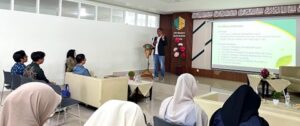
The event proceeded in an orderly and interactive manner, beginning with an opening by the committee and followed by presentations by the speakers. Throughout the session, participants actively participated in the presentations and engaged in a lively discussion. During the question-and-answer session, students raised various questions related to the implementation of qualitative methodology and opportunities for developing ethnomedical research in the pharmaceutical field. The discussion reflected the students' strong interest in developing innovative, culture- and community-based research.
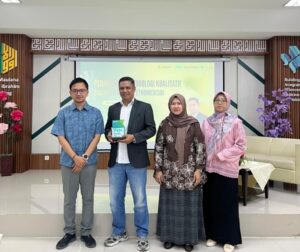
Based on the results of an interview with the Head of the Master of Pharmacy Study Program, Dr. apt. Burhan Ma'arif ZA, S.Farm., M.Farm., it was conveyed that the field of ethnomedicine still has a limited number of experts so it is important for students to understand the concepts and methodologies in depth. He emphasized that ethnomedicine is an integration of anthropology and social pharmacy that has strengths in the social science aspect. Therefore, this field is one of the strategic directions in the development of pharmaceutical science in the future. He hopes that this activity can broaden students' insights in determining more varied research directions and not limited to conventional topics. Ethnomedicine is considered capable of being an alternative research development, especially in the fields of community pharmacy and community medicine, thus producing more contextual and multidisciplinary research. With this guest lecture activity, students are expected to be able to develop innovative research that is relevant to the needs of society and the development of science in the field of pharmacy.
Contributor: Ria Najja Nila Nafi'ah (PSSF 23) & Jasmine Athiyya Arva Ma`Sum (PSSF 23)