EN
EN  ID
ID  AR
AR  ZH
ZH 
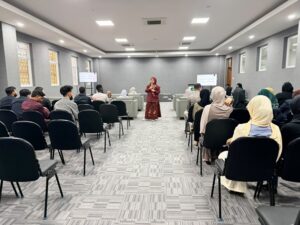
Taking place in the Multipurpose Hall of the Ibnu Thufail Building, Campus 3, the Unit of Medical Health Professional Education (UMHPE) and the Faculty Excellence Development Unit (UPKF) of the Faculty of Medicine and Health Sciences (FKIK) UIN Maulana Malik Ibrahim Malang held Focus Group Discussion (FGD) 2023 Hajj Health Curriculum. This activity was attended by faculty leaders and study program leaders, curriculum units at the study program level and invited representatives from the Batu City Health Office, Karsa Husada Regional Hospital, Batu City and the Class One Port Health Office (KKP) of Surabaya City.
The event was opened with remarks from Prof. Dr. dr. Yuyun Yueniwati PW, M.Kes., Sp.Rad(K), as Dean of FKIK UIN Maulana Malik Ibrahim Malang. She expressed her gratitude for the support and cooperation from the Batu City Health Office, Karsa Husada Hospital, Batu City, and also from the First Class KKP of Surabaya City to the faculty and especially for the 4 study programs under FKIK.
“"This activity was held in order to realize the faculty's excellence related to Hajj health," said Prof. Yuyun.
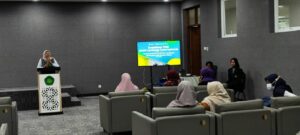
The first presentation was delivered by Dr. Muhammad Rizal Novianto, MHPE., regarding strengthening Academic Health System (AHS) in the field of Hajj health. AHS requires a health system that integrates the roles of educational institutions, teaching hospitals, and local governments to achieve a high level of public health. Possible activities include Hajj health guidance during the waiting period, Hajj health guidance during departure, and a family-based approach to Hajj health guidance.
Dr. dr. Ermin Rachmawati, M.Biomed then presented a presentation on the Implementation of the Hajj Health Curriculum as a Faculty Excellence. She explained the basis for formulating the FKIK excellence curriculum related to the determination of the study materials for the Hajj health curriculum in 2016 and is now one of the faculty's missions for 2021-2025, namely developing Hajj health as a Faculty excellence in the Tridharma of Higher Education. The implementation of Hajj health in the curriculum was also explained by her, starting from the distribution of the Hajj medical curriculum at the preclinical stage, the clinical stage of the medical profession, Hajj health in the pharmacy study program, and Interprofessional Education (IPE) which is included in the faculty excellence course.
The 2022 Hajj Health-Based IPE evaluation presentation was delivered by apt. Dhani Wijaya, M.Farm.Klin, covering student evaluations, Hajj Health Candidate (CJH) evaluations, and Hajj Health Study Program (DPL) evaluations. Building patient trust has become a crucial aspect and is believed by IPE participants, and negative assumptions about each profession, which should have received the lowest scores, were also addressed. In the Hajj Health Candidate (CJH) evaluation, the average CJH evaluation score reached 88.04% across all aspects. Meanwhile, in the DPL evaluation, the highest score was obtained on the point of importance of FKIK in providing students with opportunities to participate in the Hajj Health HIPE.
After the presentation from the faculty, it was continued with a presentation from stakeholders, namely the Batu City Health Office and Karsa Husada Regional Hospital, Batu City.
“"With the high number of elderly pilgrims this year, we hope for cooperation from various parties to improve, or at least maintain, the health of elderly pilgrims. Furthermore, measurable health interventions for pilgrims are needed, based on the results of the first phase of the examination and to achieve a significant impact on the second phase," said Dr. Kartika Trisulandari, Head of the Batu City Health Office.
Furthermore, Dr. Bambang Rishardana, Sp.B. FINACS, as the head of the Karsa Husada Regional Hospital's coordination committee in Batu City, said that young doctors play a role in providing examination services for prospective Hajj pilgrims at the hospital, starting from anamnesis, checking vital signs, physical examinations, and electrocardiography examinations, by reporting the results to the medical coordinator.
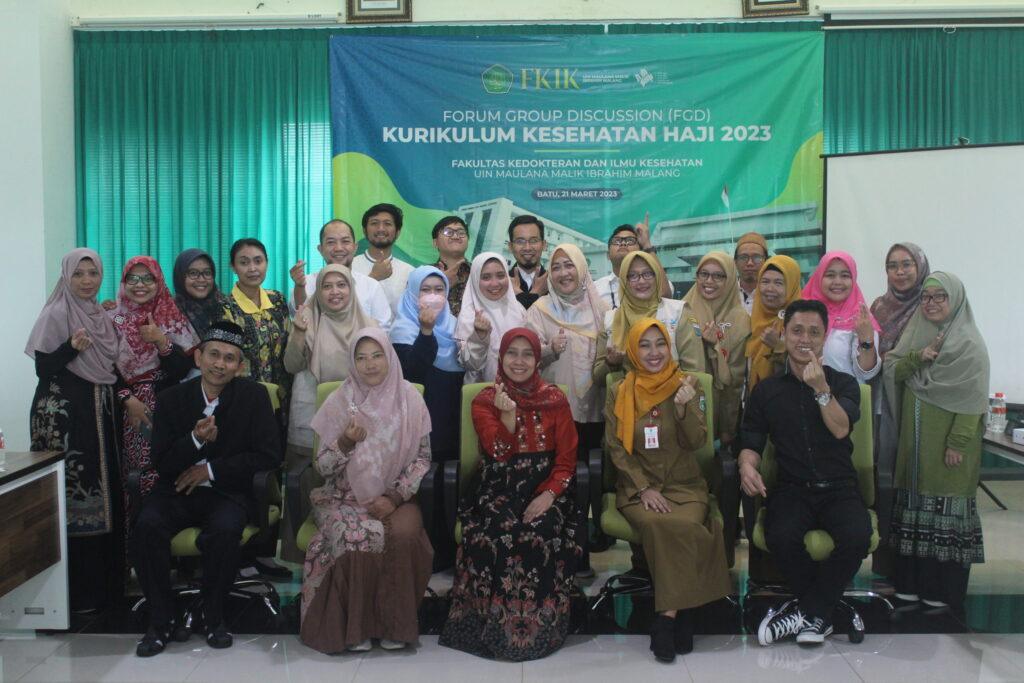
At the end of the event, a focus group discussion (FGD) was held, inviting stakeholders to first outline current program challenges and the expectations of their respective institutions. Moderator Dr. Doby Indrawan, MMRS., then presented responses from each participant, including faculty leaders and study program leaders within the FKIK.
“"The conclusion of this FGD is that we need to mapping "The implementation of Hajj pilgrim activities, high-risk Hajj pilgrim data, and alignment with the study program curriculum. The hope is that everything will be connected, from the first check-up until departure, and involve undergraduate and professional students within the Faculty of Medicine and Health Sciences (FKIK)," said Dr. Doby.
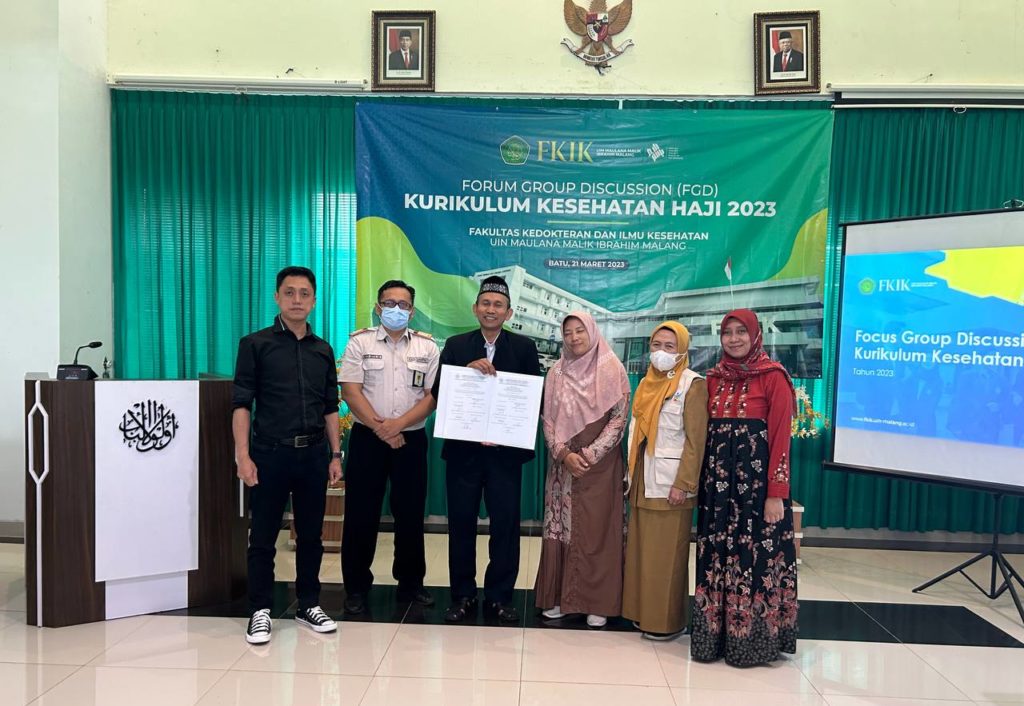
Following the presentation of the conclusions and recommendations from the minutes, the minutes of the FGD were signed. Hajj activities that can be included in the educational process at FKIK require a coordinator and involve faculty units, namely UMHPE, UPKF and UPPM, polyclinics, and each study program. Therefore, general and technical guidelines are needed in the study program, covering the curriculum (both incidental and routine), activities, assessments, monitoring and evaluation, and as a graduation requirement.
Contributor: Fathia (FKIK Public Relations)