EN
EN  ID
ID  AR
AR  ZH
ZH 
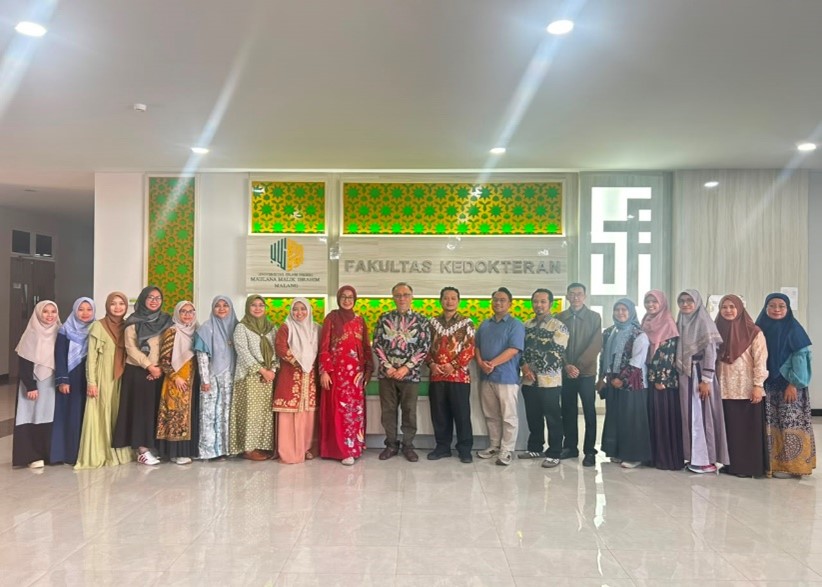
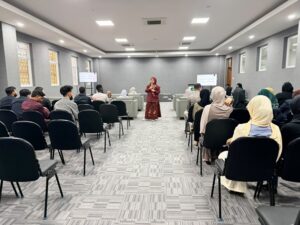
The Faculty of Medicine and Health Sciences (FKIK) UIN Maulana Malik Ibrahim Malang held an ISO Audit on Thursday (18/6) in the 2nd Floor Meeting Room of the Ar-Rahim Building. This activity was attended by the Dean of FKIK Prof. Dr. dr. Yuyun Yueniwati Prabowowati Wadjib, M.Kes, Sp.Rad(K), the Vice Deans, Head of Administration, Head and Secretary of Study Programs, and Head of Faculty Support Units as part of efforts to strengthen the quality management system within the faculty. The ISO Audit is a strategic step in ensuring that all governance processes, academic services, and administration run according to established quality standards. This activity also serves as a means of continuous evaluation to encourage improvements in service quality and strengthen the quality culture within the FKIK environment.
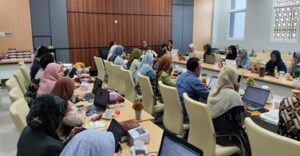
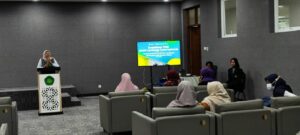
On this occasion, Ir. Solichin Agung Darmawan provided guidance on the importance of values (value) as the primary foundation for building a superior and sustainable organization. According to him, an organization's success is determined not only by the strength of its human resources, competencies, and systems, but also by the values that guide every organizational activity. One message that captured the attention of participants was his statement, "“Strength if there isn't any value"What's the point?" This message emphasizes that power without being based on good values will lose its direction and will struggle to provide sustainable benefits to the organization or society.
He explained that values such as integrity, responsibility, discipline, commitment, and honesty must be a living culture in every organization. These values are the foundation that will strengthen the implementation of various quality systems, including ISO standards applied in higher education environments. Furthermore, Ir. Solichin emphasized that ISO audits should not be viewed as a process of finding fault or simply fulfilling administrative paperwork. Audits are an important instrument for measuring the effectiveness of existing systems, identifying opportunities for improvement, and ensuring a culture of continuous improvement.continuous improvement) can be applied consistently.
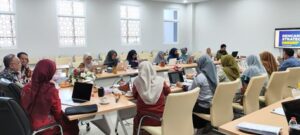
During the discussion session, the audience was also encouraged to develop the perspective that quality is a shared responsibility. The successful implementation of a quality management system depends not only on leadership policies but also on the commitment of the entire academic community to carry out their duties and responsibilities professionally.
Through this ISO audit, the Faculty of Medicine and Health Sciences (FKIK) of UIN Maulana Malik Ibrahim Malang reaffirms its commitment to achieving effective, accountable, and quality-driven faculty governance. With the support of a robust system and solid organizational values, FKIK is optimistic about continuing to improve the quality of education, research, and community service, while strengthening the institution's competitiveness at both the national and international levels.
This activity serves as a reminder that a quality culture is built not only through work procedures and standards, but also through the character and values held by each individual within the organization. When sound systems work hand in hand with strong values, quality will grow into a deep-rooted and sustainable culture.