EN
EN  ID
ID  AR
AR  ZH
ZH 
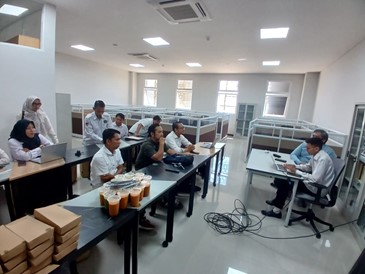
ROCK – Tuesday morning, April 21, 2026, the atmosphere on the second floor of the Arrahim Building, Campus 3, UIN Maulana Malik Ibrahim Malang, seemed busier than usual. Behind the quiet doors of the Meeting Room, a major step was being planned. It was not merely an administrative matter, but a promise to protect every life operating under the auspices of the Faculty of Medicine and Health Sciences (FKIK).
That day, it was officially formed Occupational Safety and Health and Environment Task Force (K3L Task Force) FKIK UIN Malang. A unit born from the realization that behind the noble mission of producing future doctors and pharmacists, there are real risks lurking in every corner of the laboratory and practice room.
Not Just an Academic Routine
For the layperson, campus may be synonymous with stacks of books and classroom discussions. However, for medical and pharmacy students, their "battlefield" is a laboratory filled with precision and risk. There, they grapple with corrosive chemical reagents, infectious biological samples, and sharp medical instruments that demand intense concentration.
“"K3L is no longer just a supplement, but a foundation. We don't want to produce healthcare workers who are scientifically competent but neglect their own safety and that of their environment," said one of the meeting leaders during a heated discussion on the formation of the Task Force.
The implementation of OHS in health education institutions is far more complex than in general education. While in theory classes the greatest risk might be eye strain, in the Faculty of Medicine and Health Sciences (FKIK), exposure to biological agents or accidents during practical work can be fatal. This is why the Faculty of Medicine and Health Sciences (FKIK) of UIN Malang felt the need for a structured "gatekeeper" in the form of an OHS Task Force.
Navigating the Risk Corridor: From the Laboratory to the Community Health Center
Academic activities at the Faculty of Medicine and Medicine, UIN Malang (FKIK UIN Malang) are truly dynamic. Students don't just stay on campus. They move from sterile medical laboratories, touch pharmaceutical materials in a simulated pharmacy, and even work directly in healthcare facilities such as teaching hospitals, community health centers, and even industrial environments.
With each location change, occupational health and safety (OHS) risks loom. Without proper risk management, injuries, cross-infections, and even chemical poisoning can occur at any time.
The formation of the K3L Task Force aims to identify these hazards. This task force's role is not limited to responding to accidents, but rather to a preventative role—ensuring that every procedure performed by students and faculty meets strict safety standards.
Sewing Hope into Guidelines and SOPs
The meeting, which took place at the Arrahim Building, did not stop at personnel appointments. Another major agenda item was the drafting of General Guidelines and Specific Standard Operating Procedures (SOP).
Why is a specific SOP necessary? Because each work environment has different hazard characteristics.
- Microbiology Laboratory SOP of course different from SOP for Clinical Practice in Hospitals.
- Handling of liquid chemical waste in Pharmacies has a different protocol from handling sharp medical waste (syringes) in the medical environment.
“"We are currently compiling a safety 'bible' that will serve as a compass for every member of the academic community. This includes everything from the proper use of PPE to evacuation protocols in the event of a laboratory emergency," added a member of the newly formed Task Force.
These guidelines are designed to be user-friendly while still meeting national and international regulatory standards. The hope is that these guidelines will not simply become a dusty document on a library shelf, but rather a way of life on campus.
Aiming for the 2026-2027 Academic Year
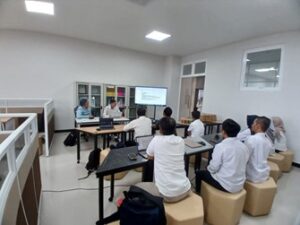
The task force, currently led by Mr. Yossi, is targeted to quickly finalize the K3L guidelines so they can be fully implemented in the upcoming academic year. This means that when new students arrive at UIN Malang Campus 3, they will be entering a safety-conscious ecosystem. Parents can feel more at ease entrusting their children to the campus, knowing that the faculty is serious about ensuring their children's safety.
The implementation of the new academic year also provides an opportunity to instill a culture of safety and health from an early age. Students are not only taught how to treat patients but also how to maintain their own health and safety while providing services.
Although personnel have been assigned, the team will continue working through a series of follow-up meetings to finalize the draft guidelines and ensure they are truly applicable in the field. Similar enthusiasm was also expressed by the task force members, who comprise lecturers and educational staff; they actively participated in intensive discussions to produce comprehensive guidelines for the entire academic community.
The Humanist Side: Safety is a Right
Behind technical terms like "risk management" or "biosafety level," there are human values being championed. K3L is about ensuring a student returns home safe and sound after a long day of researching viruses in the lab. K3L is about ensuring a lecturer remains healthy until retirement without exposure to carcinogenic substances that have accumulated over the years.
The FKIK UIN Malang's move to establish the K3L Task Force demonstrates respect for human dignity. Higher education should not be paid for with injury or loss of health.
“"The Arrahim Building bears witness today that safety is a non-negotiable priority. We want the Faculty of Medicine and Health Sciences (FKIK) of UIN Malang to be a role model for how a health campus manages risk with care," concluded one of the meeting participants before the room fell silent again, leaving behind a pile of drafts that will serve as a safeguard for thousands of academics in the future.
Structural
The structure of the K3L Task Force of the Faculty of Medicine, UIN Malang's Medical Faculty is comprehensively structured, involving various leadership elements, lecturers from each study program (Medical Education Study Program, Medical Profession Study Program, Pharmacy Study Program, Pharmacist Study Program) and Laboratory Assistants. The steering committee is led directly by the Dean, with Vice Deans 1, 2, and 3 as the main persons in charge. Under the command of Mr. Yossi as Chair and Mr. Yusuf as Secretary, the task force's operations are divided into three strategic areas: the Risk Identification and Control Sector led by Malik, Novan, Mr. Farid, and Nur Aini; the Socialization, Education, and Training Sector managed by Mr. Okki, Mr. Hajar, Mrs. Zaim, and Mr. Farid F; and the Monitoring, Audit, and Evaluation Sector led by Mrs. Shofi, Mrs. Vera, Mr. Imam, and Mr. Nanang. This systematic division of labor is expected to ensure that every corner of the FKIK work environment, from laboratories to clinical facilities, remains within maximum safety and health standards.