EN
EN  ID
ID  AR
AR  ZH
ZH 
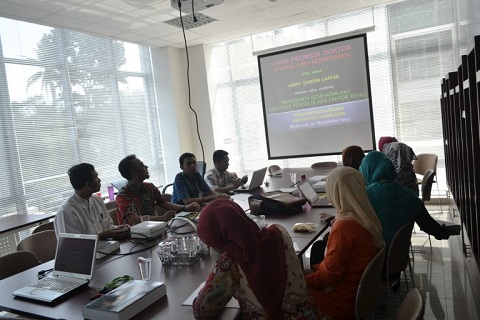
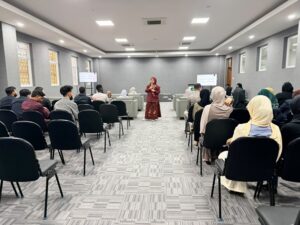
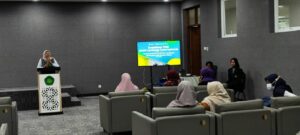
Every two weeks, precisely on Friday, all lecturers and employees of FKIK UIN Malang always hold an Evaluation Meeting and deliver material (integration of science and religion), on this occasion, Friday, September 2, 2016, Dr. Herry Darsim Gaffar, delivered material on "Hajj Health Management", where Hajj health management is very important in carrying out the Hajj pilgrimage.
The Hajj pilgrimage is the fifth pillar of Islam in the form of a series of ritual activities, which are carried out every year in the Holy Land (Saudi Arabia) by more than two million Muslims (pilgrims) from various ethnic groups originating from more than 140 countries in the world. In the Qur'an, Surah Aali 'Imraan, verse 97, Allah SWT says: "... walillaahi 'alannaasi hijjulbayti manistatha'a ilayhi sabiila," which means: "... and (among) the obligations of humans towards Allah SWT is to perform the pilgrimage to the House of Allah, namely for those who are able."’
The different seasons and weather conditions between Indonesia and Saudi Arabia also pose a high risk to the health of Hajj pilgrims. Hot weather and outdoor activities can cause various health problems. As is the case in the Holy Land, it can be a major source of health problems for pilgrims. According to the Ministry of Health in 2009, in the last ten years, the death rate for pilgrims has reached 2.1-3.2 per 1, with nearly 70% deaths in the age group 60 years and above.
Based on the results of research conducted by Dr. Herry, the risk factors that play the most role in the death of the congregation are caused by internal risk factors (FRI) and those aggravated by the level of exposure to external risk factors (FRE). The health condition of elderly congregations is one of the health conditions with the potential for high risk (Risk Condition), but is not the main risk factor causing death (Cause of Death).
He believes that ongoing assessment and improvement of the Indonesian Hajj Health Program (PKHI) system is necessary, particularly in implementing comprehensive, integrative, holistic, and humanistic Hajj health management, taking into account all relevant aspects and components. Efforts should also be made to reduce the main potential risks, namely physical fatigue (physical stress) and mental tension (mental stress), caused by prolonged exposure to extreme environmental conditions.