EN
EN  ID
ID  AR
AR  ZH
ZH 
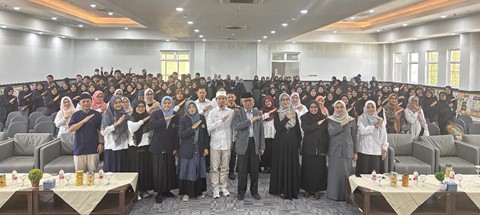
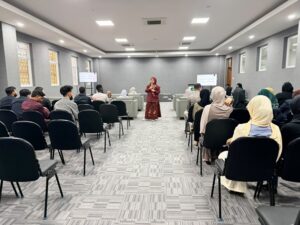
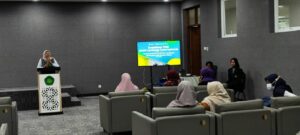
The Faculty of Medicine and Health Sciences (FKIK) UIN Maulana Malik Ibrahim Malang officially held the Closing Ceremony of KKM-HIPE (Student Work Lecture-Hajj Interprofessional Education) on Tuesday, February 3, 2026, at the Humanities Auditorium of the Arrahim Building with the theme “Together Toward Wellness” as part of the Faculty of Medicine, UIN Malang's Leading Program for the 2025/2026 Academic Year.
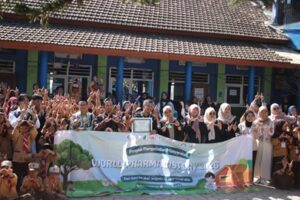
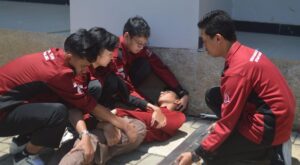
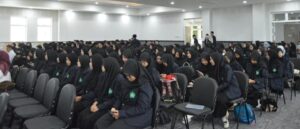
The closing ceremony culminated a series of Interprofessional Education (IPE)-based community service activities conducted by students from across the FKIK UIN Malang study programs. The event also featured an exhibition of intervention media for Prospective Hajj Pilgrims (CJH) as a form of academic accountability report for students during the HIPE-KKM implementation.
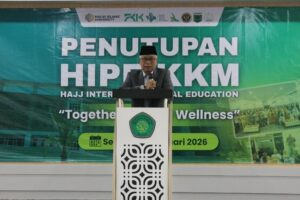
In his remarks, Dr. H. Isroqunnajah, M.Ag., as the Head of the Institute for Research and Community Service (LP2M) of UIN Maulana Malik Ibrahim Malang, emphasized that KKM is not just a form of implementation of the Tri Dharma of Higher Education, but a program that provides real impacts for the community through cross-sector collaboration, including with the health service and the Ministry of Religious Affairs and the Ministry of Hajj and Umrah. He said that the results of the mentoring showed that 87 prospective Hajj pilgrims had reached the istithaah condition, while one person had not reached that condition and needed to be evaluated in the future. In general, the implementation of the 2026 HIPE KKM was assessed to have achieved a 99.9 percent success rate.
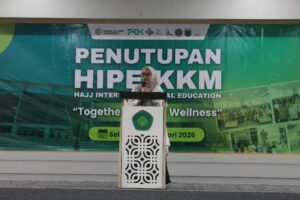
Dr. dr. Ermin Rachmawati, M.Biomed., Vice Dean for Academic Affairs of the Faculty of Medicine and Health Sciences, UIN Malang, also expressed a positive assessment. She assessed that the implementation of HIPE-KKM this year went very well, with high student commitment and thorough activity planning. The IPE concept, which has been pioneered since 2017, continues to be strengthened, both in terms of the system, health screening indicators for prospective ... project-based learning able to provide comprehensive health interventions so that prospective pilgrims can achieve istithaah and independence from a biological, psychological, and social perspective. The role of students and field supervisors as educators, mentors, counselors, and health monitoring officers is considered crucial in guiding prospective pilgrims during the waiting period for their Hajj departure.
Meanwhile, Ms. Larasati Sekar Kinasih, M.Gz., as the Head Lecturer of KKM-HIPE 2026, stated that the implementation of HIPE-KKM this year was running in accordance with the objectives of community service. Students were assessed as being able to coordinate well with the Community Health Center, the Ministry of Religious Affairs, and related agencies in Batu City. Student readiness, both in planning and implementing programs in the field, as well as the ability to adapt to the conditions of prospective Hajj pilgrims, was one indicator of the activity's success. A positive response was also shown by the prospective Hajj pilgrims, both through openness of information and active participation in activities that had been planned with students.
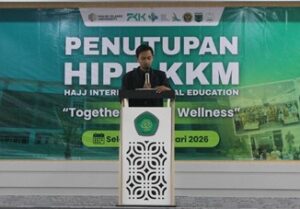
Achmad Khidir Afandi, the Head of the 2026 KKM-HIPE Student Program from the 2023 class of the Medical Professional Education Study Program, expressed his gratitude and pride for the successful implementation of all KKM activities. He stated that the implementation of the 2026 KKM-HIPE went smoothly without any significant obstacles thanks to the cooperation of all participants. However, he acknowledged that the program still requires various evaluations, particularly on the system and administration aspects, to improve the comfort and effectiveness of future implementation. He also assessed that the entire KKM program provided a unique impression and benefits for the community, and highlighted the challenges in coordinating more than 200 students from two different study programs, which were successfully overcome through communication and a unified vision. He hopes that the KKM-HIPE activities can continue, develop, and have a wider impact in the following years.
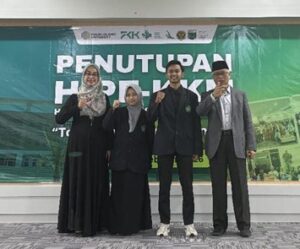
The entire series of activities concluded with the 2026 KKM-HIPE CJH Intervention Media Appreciation Event. In this activity, each group exhibited intervention media in the form of posters and journaling booklets that had been prepared during the KKM period. Furthermore, all the exhibited works were also presented by each KKM group and assessed directly by the supervising lecturer based on the established assessment criteria. Through this exhibition and assessment activity, it is hoped that the objectives of the activity will be achieved as a means of appreciation, evaluation, and strengthening the role of students in delivering health education to the community. Thus, the entire series of activities were declared to have run smoothly and were officially closed.
Contributors: Deliya Shafa Oktantia (PSSF 23) and Ria Najja Nila Nafi'ah (PSSF 23)